Abstract:
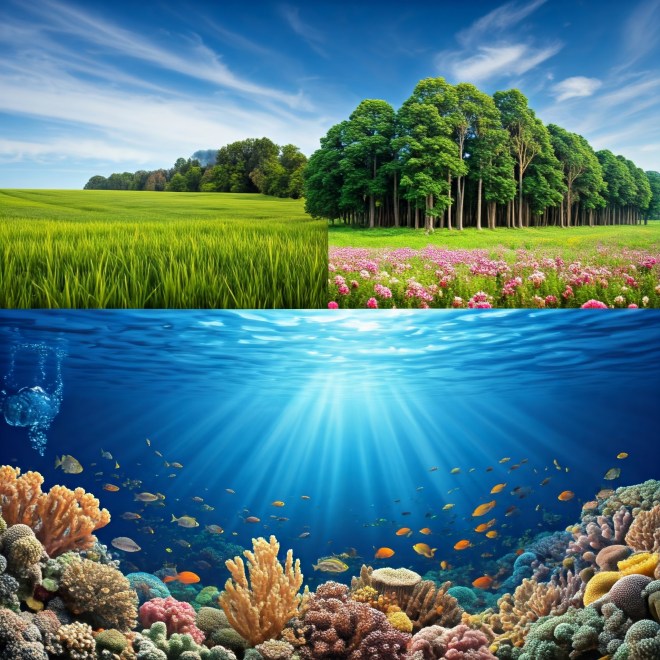
The intricate balance and interdependence observed within terrestrial ecosystems provides strong evidence for intelligent design. The concept of irreducible complexity posits that the removal of any single component would render the entire system non-functional. This argument challenges the gradualist explanations of evolutionary theory, highlighting the improbability of developing complex food webs through incremental changes. Four specific examples of ecosystems are presented to demonstrate the inherent limitations of gradual evolution in achieving the intricate interdependencies observed in modern biomes.

Introduction
The awe-inspiring complexity of terrestrial and aquatic ecosystems, with their intricate networks of interdependent species and finely tuned abiotic factors, presents a significant challenge to naturalistic explanations for their origin. While evolutionary theory proposes gradual, incremental changes as the driving force behind biological diversity, the intricate balance and interdependence within ecosystems suggests a more deliberate and orchestrated origin. Here we explore the argument that the simultaneous emergence of multiple interacting species and the establishment of intricate ecological relationships is far more likely to be the result of intelligent design than a series of random, incremental changes.
Irreducible Complexity and Ecosystem Function
The concept of irreducible complexity, popularized by Michael Behe (source), posits that certain biological systems are so complex that removing any single part would render the entire system non-functional. This principle, while initially applied to biochemical systems, can be extended to the ecological realm.
Consider a typical terrestrial ecosystem, such as a temperate forest. It comprises a complex network of interactions:
- Producers: Photosynthetic plants form the foundation, capturing solar energy and converting it into biomass.
- Consumers: Herbivores consume plant material, while carnivores prey on herbivores, creating a multi-layered food web.
- Decomposers: Fungi and bacteria break down dead organic matter, recycling nutrients back into the ecosystem.
The Wood Wide Web is an underground network of fungal threads that connect the roots of trees and other plants, allowing them to share resources like water and nutrients. This intricate system also facilitates communication between plants, enabling them to warn each other of predation and disease threats and even transmit vital nutrients to seedlings. (For a good video on this see here.)
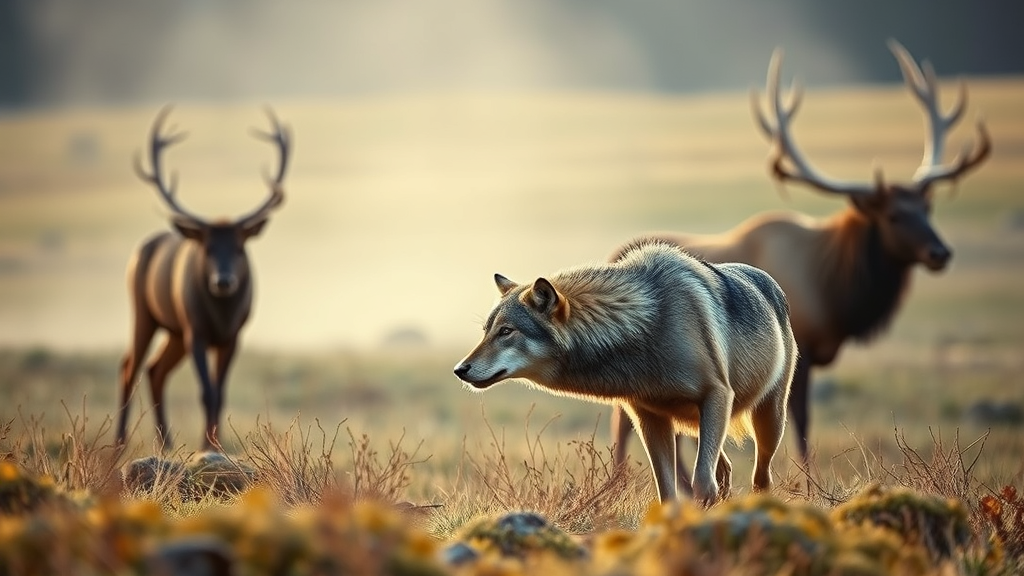
This intricate web of life is not merely a collection of individual species; it is a tightly integrated system. Removing a single component can have cascading effects, potentially disrupting the entire ecosystem. For example, in Yellowstone National Park, the disappearance of a keystone predator (wolves) lead to an explosion of herbivore (elk) populations, decimating plant life (e.g., young deciduous trees) and ultimately destabilizing the entire food web (especially around streams). Beavers need willows to survive in the winter, and without them, the beaver population fell, which further negatively impacted the stream ecology including fish and songbird populations, which need beaver dams along streams to provide proper habitat. Reintroducing the wolves corrected all that (Wolf Reintroduction Changes Ecosystem).
Challenges to Gradual Evolution
The gradualist explanation for ecosystem development, favored by Neo-Darwinian evolutionary theory, faces several significant challenges:
- The Improbability of Simultaneous Emergence:
Gradual evolution posits that ecosystems evolved through a series of incremental changes. However, the emergence of a functional ecosystem requires the simultaneous appearance of multiple interacting species. For example, the evolution of a predator species could only happen if suitable prey species are already present. Conversely, the emergence of a new prey species without predators would result in less selective pressure to adapt and face problems due to overpopulation. The probability of these simultaneous emergences occurring randomly and consistently across all trophic levels is exceedingly low.
- The Problem of Intermediate Forms:
Evolutionary theory predicts the existence of intermediate forms—rudimentary ecosystems with less complex interactions; however, evidence for such transitional ecosystems is lacking. Observed ecosystems exhibit a high degree of complexity and interdependence, suggesting a sudden emergence rather than gradual development. Where are the “proto-ecosystems” with rudimentary food webs and limited species interactions? The absence of such “proto-ecosystems” that should be evolving today weakens the gradualist argument.
- The “Just So” Stories:
Gradualists often resort to “just so” stories—highly improbable chains of events that must occur in a specific order to achieve a functional ecosystem. These narratives often rely on a series of coincidences and unlikely occurrences, stretching the limits of plausibility. For example, explaining the evolution of a complex symbiotic relationship between a plant and a pollinator requires a series of highly specific adaptations to occur in both organisms simultaneously, a scenario that defies the laws of probability. What would be the point of flowers if there were no pollinators to pollinate them? If a bee-like insect happened to evolve, but there were no flowers with nectar to attract the bee and pollen to cling to the insect’s hairs, the useless hairs, pollen baskets, long tongues, etc. would be eliminated by blind natural selection. That both happened to just co-evolve in a step-by-step manner culminating at both being ready to serve each other at the same time is a “just-so” story.

- The “Eye of the Beholder” Problem:
Gradualists often point to minor changes within ecosystems, such as fluctuations in species abundance or shifts in species distribution, as evidence of gradual evolution. However, these minor changes may not necessarily represent significant evolutionary leaps in ecosystem complexity. True ecosystem development requires the emergence of novel ecological interactions and the establishment of intricate networks of interdependence between species. For example, a slight increase in the population of a particular herbivore species might not constitute a significant evolutionary event if it does not lead to the emergence of new predator-prey relationships, the evolution of novel plant defenses, or the establishment of new symbiotic interactions. In essence, whether a change within an ecosystem constitutes a significant evolutionary step depends on the perspective of the observer. Minor fluctuations may appear significant to the observer, while truly transformative events, such as the emergence of a new keystone species or the establishment of a novel ecological niche, may go unnoticed. This “Eye of the Beholder” problem highlights the subjective nature of identifying significant evolutionary events within ecosystems and challenges the ease with which minor changes can be interpreted as evidence for gradual ecosystem development.
Examples of Irreducibly Complex Ecosystems
To further illustrate the challenges faced by gradualist explanations, let us examine four examples of simplified ecosystems that, from an intelligent design perspective, could not have evolved gradually into the complex biomes we observe today:
- Coral Reefs:

Coral reefs are incredibly diverse and interdependent ecosystems. The symbiotic relationship between corals and zooxanthellae, the photosynthetic algae that provide corals with nutrients, is a cornerstone of reef function. The emergence of this intricate symbiosis, along with the diverse array of reef-associated organisms (fish, invertebrates, etc.), would require a highly improbable series of coordinated evolutionary events.
The gradualist explanation for the origin of such a complex and interdependent ecosystem remains highly speculative. For instance, how could a coral polyp, lacking the necessary enzymes for photosynthesis, evolve to host and benefit from a photosynthetic symbiont? The emergence of this crucial symbiosis appears to require a coordinated and simultaneous development of both partners. Furthermore, the intricate relationships between reef fish, such as cleaner fish removing parasites from other fish, and the complex predator-prey interactions within the coral reef community, all point to a level of interdependence that would be difficult to achieve through random, incremental changes.
- Tropical Rainforests:

Tropical rainforests are characterized by immense biodiversity and complex food webs. The intricate interactions between plants, pollinators, seed dispersers, and herbivores are essential for rainforest function. The emergence of such a diverse and interconnected community through a series of incremental changes is highly improbable.
The simultaneous evolution of specialized adaptations in plants and their associated pollinators and herbivores presents a significant challenge to gradualist explanations. For example, the co-evolution of long-tongued hummingbirds and deeply tubular flowers requires a high degree of specificity and coordination that is difficult to explain through random mutations and natural selection.
Additionally, the intricate relationships between plants and their fungal symbionts, which aid in nutrient absorption, and the complex interactions between epiphytes and their host trees, all point to a level of interdependence that would be difficult to achieve through gradual, incremental changes.
- Grassland Ecosystems:

Grasslands are characterized by a unique balance between grasses and grazers. The emergence of this delicate balance, with its intricate interactions between grasses, herbivores, and large grazers, would require a series of highly coordinated evolutionary events.
The gradualist explanation for the origin of such a finely tuned ecosystem, with its complex interplay of biotic and abiotic factors, remains highly speculative. For instance, how could a grassland ecosystem evolve to maintain a stable balance between grass growth, herbivore grazing, and the occurrence of natural fires? Grazers require specialized molars for grazing and efficient digestive systems (including symbiotic bacteria) for processing tough grasses. The grass species must have root systems deep enough to grow back after fires. The requirements of having a successful grassland ecosystem imply a simultaneous emergence and finely tuned interplay of multiple factors that would be difficult to achieve through random, incremental changes.
- Deep-Sea Hydrothermal Vents:
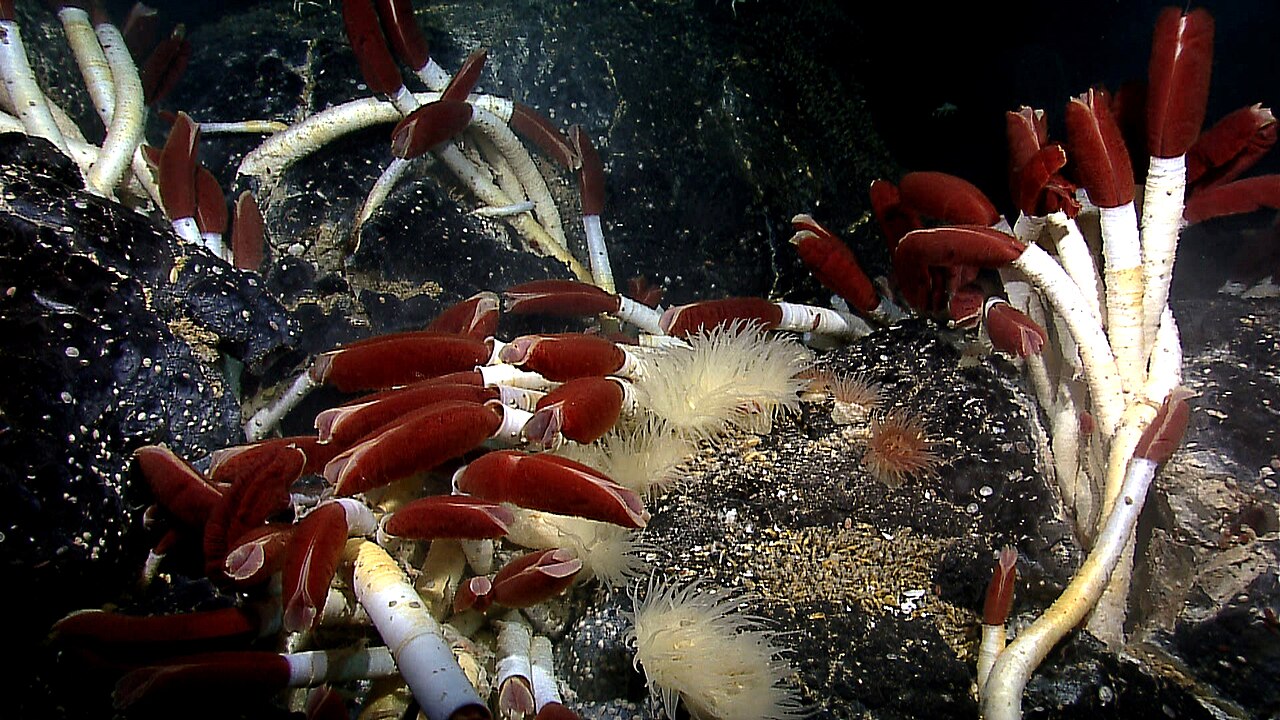
Deep-sea hydrothermal vents support unique chemosynthetic ecosystems, where organisms derive energy from inorganic compounds. The emergence of these chemosynthetic communities, with their specialized microbial communities and unique animal adaptations, would require a series of highly improbable, coordinated, and simultaneous evolutionary events in a deep-sea environment. For example, how could a complex community of chemosynthetic bacteria, tube worms, and other vent-associated organisms evolve in the absence of sunlight and with limited access to organic matter? These organisms must be able to withstand high temperatures and pressures, as well as develop the necessary symbiotic relationships with chemosynthetic bacteria to survive from the get-go. The emergence of such a unique and self-sustaining ecosystem appears to require a more orchestrated and deliberate process.
Conclusion
The intricate balance and interdependence observed within terrestrial and marine ecosystems, with their finely-tuned predator-prey relationships and complex interactions with abiotic factors, strongly suggests intelligent design. The improbability of gradual development, the lack of evidence for “simple” ecosystems evolving today, and the limitations of “just so” stories all point towards a more sudden and purposeful origin for ecosystems.
What do you think? Let me know in the comments below!
AI note: This post was produced with the initial assistance of artificial intelligence, with subsequent human revisions and final editing to ensure it conforms with the author’s standards and perspective.
 Biblical Lessons from Nature